

Quick answer
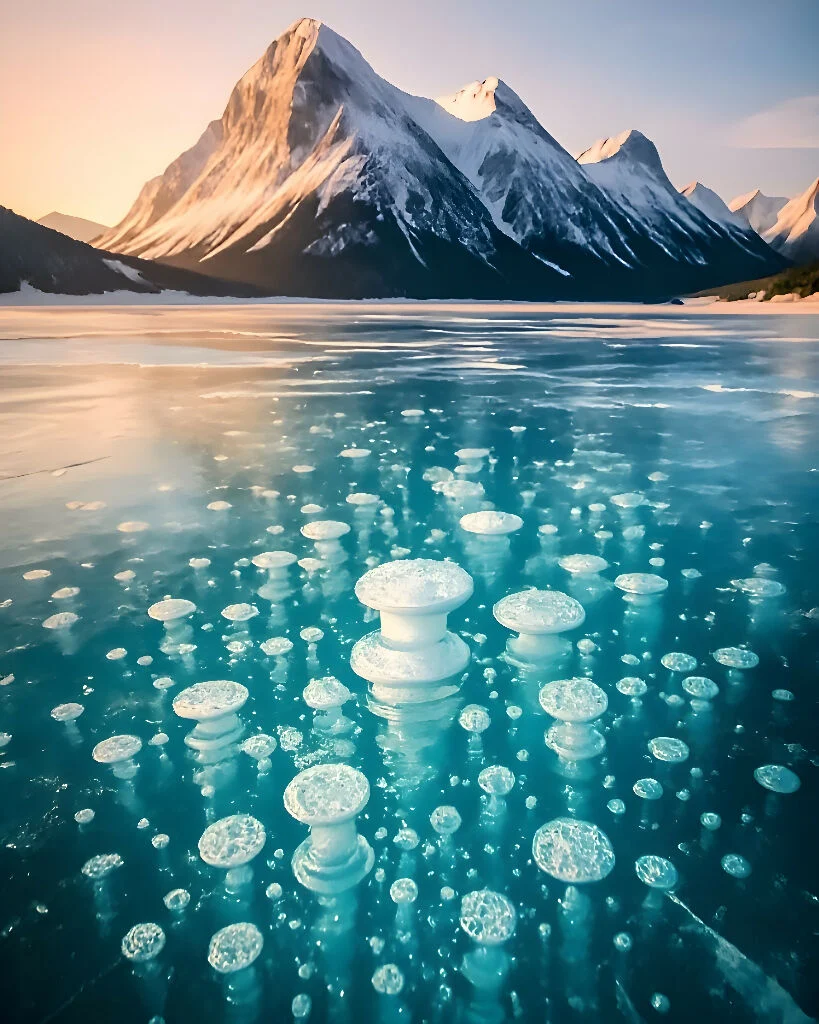
Abraham lake ice bubbles conditions are optimal when the lake freezes without heavy snowfall, typically between mid-December and late February. Clear ice at least 10 centimetres thick reveals the methane columns; any snow cover or surface slush obscures them entirely. Temperature fluctuations that cause cracking or layered ice reduce visibility, while prolonged cold snaps below –15°C produce the clearest windows.
Methane trapped in Abraham Lake's ice forms vertical columns only a few centimetres wide, but surface conditions determine whether you see them or stare at opaque white. The lake sits at 1,340 metres elevation in the David Thompson Highway corridor, where Clearwater County's continental climate produces deep winter freezes but erratic chinook winds. A single warm front can dump wet snow across kilometres of shoreline, turning glass-clear ice into a featureless blanket overnight. Freeze progression dictates the first safe-access window. The lake begins icing in early December near the northern inlet, but full freeze across the reservoir's 32-kilometre length takes three to four weeks of sustained subzero temperatures. Early ice is thin, layered, and prone to pressure cracks; by mid-December most years the ice reaches 15 to 20 centimetres, thick enough for careful foot traffic. The clearest bubble displays occur during the first two weeks after full freeze, before wind-driven snow or surface melt compromises clarity. February offers a second window after mid-winter thaws refreeze, though layered ice from repeated freeze-thaw cycles scatters light and reduces contrast. Snowfall is the single largest clarity variable. Even five centimetres of dry powder obscures the methane columns; wet snow bonds to the surface and requires warm temperatures or mechanical clearing to remove. Photographers monitor Environment Canada's Rocky Mountain House station and road-condition cameras along Highway 11 for real-time snow depth. Wind speed matters less than snow type—chinook winds above 40 kilometres per hour can scour some shoreline sections clean, exposing bubble fields that remain hidden elsewhere. Ice thickness and structural integrity separate scenic ice from hazardous ice. Methane seepage creates localized weak zones where gas pressure prevents solid freezing; these patches appear as dark circles or honeycombed ice and should be avoided entirely. Safe access requires at least 10 centimetres of clear blue ice, verified with an auger or ice chisel at multiple points. Clusters of bubbles themselves are safe—they indicate gas already trapped—but the surrounding ice may be thinner if seepage is active. alberta lake ice bubbles conditions shift daily during shoulder seasons, and no visual cue substitutes for thickness measurement. Clearwater County does not maintain the lake or provide ice reports; visitors rely on user-generated condition updates from photography forums and social-media groups. The lake is accessible year-round with no entry fee, but winter access depends on Highway 11 remaining open and pullouts being plowed. The best arrival window runs from 08:00 to 16:00, when daylight allows safe ice assessment and exit before temperatures drop after sunset.
“Even five centimetres of dry powder obscures the methane columns; wet snow bonds to the surface and requires warm temperatures or mechanical clearing to remove.”
Optimal Abraham Lake Ice Bubbles Conditions and Seasonal Timing
The prime window for viewing methane bubbles at Abraham Lake occurs from mid-January through February when ice thickness is sufficient for safe pedestrian access. During these months, aligning your visit with the best arrival window of 08:00–16:00 ensures optimal daylight for observation.
Mid-January to February
Minimal crowds during weekdaysCold with temperatures below -10°C
Ice is typically stable and clear enough for bubble visibility during this peak winter period.
March
Increasing visitor numbersVariable, hovering around -5°C to 5°C
Rising temperatures may lead to slushy ice surfaces, reducing visibility and increasing safety risks.
Weekday mornings
Low traffic—
Early arrival provides the best lighting conditions for photography and minimizes exposure to midday wind patterns.
Verdict: The most favorable conditions occur from mid-January through February, specifically during weekday mornings to maximize both visibility and safety.
Navigating to Abraham Lake Ice Bubbles Conditions
Abraham Lake is located in Clearwater County, Alberta, accessible primarily by vehicle via Highway 11, also known as the David Thompson Highway. This route serves as the main artery connecting the lake to both the Banff National Park region and the town of Rocky Mountain House.
Highway 11 (David Thompson Highway) from Rocky Mountain House
Highway 11 (David Thompson Highway) from Lake Louise
Highway 93 (Icefields Parkway) to Highway 11 junction
Common Mistakes Avoiding Abraham Lake Ice Bubbles Conditions Risks
Winter visitors frequently underestimate the hazards of venturing onto Abraham Lake's frozen surface without proper preparation or local knowledge. Most incidents stem from ignoring ice thickness warnings and straying from designated safe zones.
Walking on ice without checking thickness reports
Check current ice conditions with local outfitters or Parks Canada before stepping onto the lake. Ice thickness varies dramatically across the surface, and unsafe zones can appear solid.
Visiting alone without emergency equipment
Travel with a partner and carry ice picks, rope, and a fully charged phone. If you break through, self-rescue tools and immediate help are the difference between recovery and tragedy.
Ignoring weather forecasts and sudden temperature shifts
Monitor multi-day forecasts and avoid the ice during chinook winds or rapid warming, which weaken structural integrity within hours. Postpone your visit if temperatures rise above freezing.
Wandering far from shore to photograph bubbles
Stay within 50 meters of shore in early or late season, and never venture onto sections with visible cracks, dark patches, or flowing water underneath. Guided tours mark safe routes based on daily assessments.
Wearing cotton layers instead of synthetic or wool
Dress in moisture-wicking base layers and waterproof outer shells—cotton retains water and accelerates hypothermia if you fall through. Pack dry clothes in a waterproof bag.
Assuming all frozen areas are equally safe
Ice near inflows, outflows, and pressure ridges is thinner and unstable. Walk established paths where possible and test ahead with a pole if exploring new ground.
Abraham Lake Ice Bubbles Conditions Operational Hours
Abraham Lake is accessible to the public at all times throughout the week. Visitors may access the site for viewing ice bubbles at their convenience.
| Monday | 00:00–23:59 | |
|---|---|---|
| Tuesday | 00:00–23:59 | |
| Wednesday | 00:00–23:59 | |
| Thursday | 00:00–23:59 | |
| Friday | 00:00–23:59 | |
| Saturday | 00:00–23:59 | |
| Sunday | 00:00–23:59 |
Abraham Lake Ice Bubbles Conditions Entrance Fees
Access to Abraham Lake is provided as a public resource. There are no admission fees or permit requirements to visit the site.
Visitors pay 0 CAD for entry as there are no admission fees or required permits for this location.
Check availability
Frequently asked questions about abraham lake ice bubbles conditions
Everything you need to know about abraham lake ice bubbles conditions